
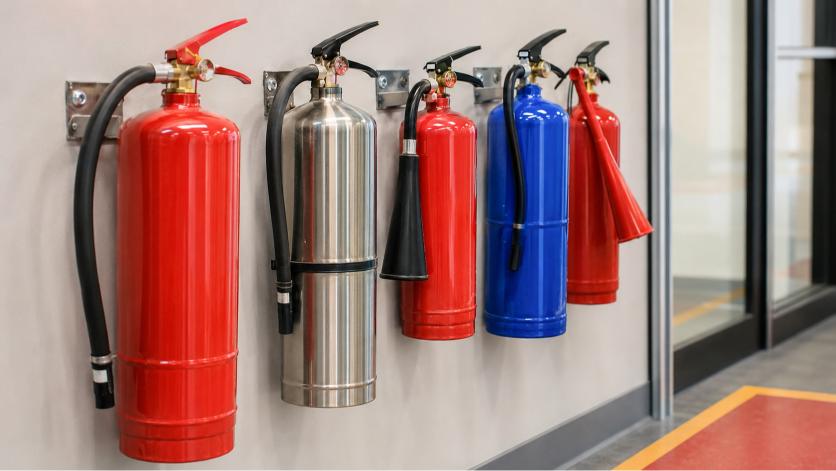
Understanding the right type of fire extinguisher is important for every home, office, shop, factory, warehouse and commercial building in Malaysia. Different fires require different extinguishing agents. Therefore, choosing the wrong extinguisher may reduce safety and create more risk during an emergency.
Fire extinguishers are one of the most common fire protection tools in a building. However, they should not be selected only based on size or price. Instead, building owners should understand the fire risk, building usage, fire class and location before choosing the right extinguisher.
FESDES helps building owners, facility managers, contractors and project teams review fire safety requirements, fire protection systems and compliance readiness for different types of buildings.
If you are unsure whether your building has the right fire extinguisher arrangement, FESDES can help review your fire safety needs clearly.
What Is a Fire Extinguisher?
A fire extinguisher is a portable fire safety device used to control small fires during the early stage. It is commonly placed in buildings, offices, shops, kitchens, factories, warehouses and vehicles.
Although a fire extinguisher is useful, it is not a replacement for proper fire safety planning. A building still needs clear escape routes, emergency lighting, exit signage, fire alarm systems and other fire protection measures.
Therefore, fire extinguishers should be part of a complete fire safety strategy.
For broader fire protection planning, you may view our fire protection consultant service.
Common Type of Fire Extinguisher
There are several common fire extinguisher types used for different fire risks. Each type is designed for specific fire classes and usage areas.
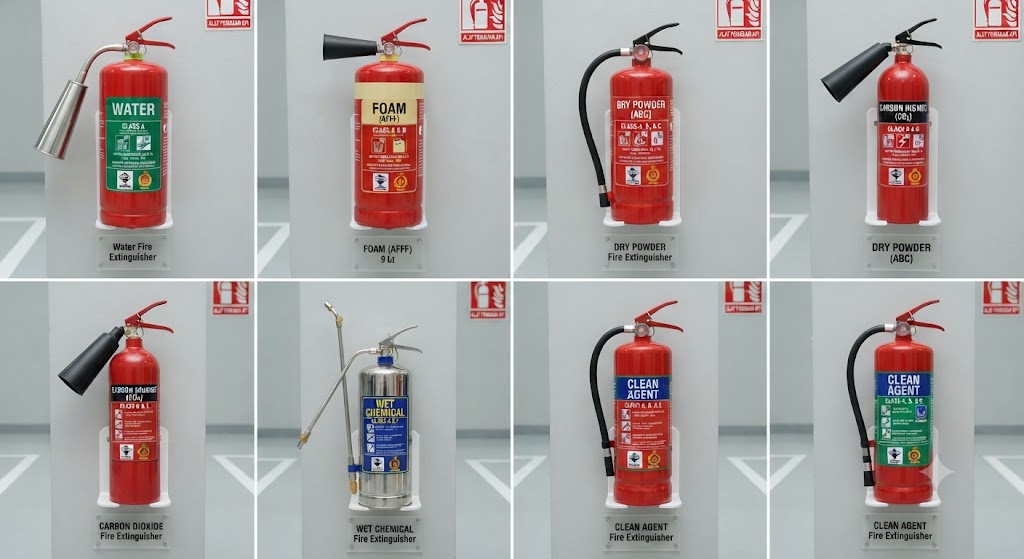
Common types include:
- Water fire extinguisher
- Foam fire extinguisher
- Dry powder fire extinguisher
- Carbon dioxide fire extinguisher
- Wet chemical fire extinguisher
- Clean agent fire extinguisher
However, not every type is suitable for every building. For example, a kitchen may require a different extinguisher compared to an office server room, factory floor or electrical room.
That is why proper fire safety review is important before selecting or placing fire extinguishers.
Water Fire Extinguisher
A water fire extinguisher is commonly used for fires involving ordinary combustible materials such as paper, wood, cloth and some solid materials.
It is usually suitable for general areas where Class A fire risks are present. However, it should not be used on electrical fires or flammable liquid fires.
For offices, schools and general building areas, water extinguishers may be considered where appropriate. Still, the final selection should depend on the actual fire risk and building condition.
Foam Fire Extinguisher
A foam fire extinguisher is commonly used for Class A and Class B fires. It can be suitable for fires involving solid materials and some flammable liquids.
Foam extinguishers are often used in areas where flammable liquid risk may exist. However, the suitability depends on the type of liquid, building use and fire safety requirement.
Therefore, building owners should not assume that foam extinguishers are suitable for every liquid-related fire risk without proper review.
Dry Powder Fire Extinguisher
A dry powder fire extinguisher is widely used because it can cover several fire classes, depending on the extinguisher type. It is commonly found in commercial buildings, factories, vehicles and general fire safety areas.
Dry powder extinguishers may be useful for fires involving flammable liquids, gases and some electrical equipment. However, the powder can create residue and may not be suitable for sensitive equipment areas.
As a result, it is important to consider the environment before placing dry powder extinguishers.
Carbon Dioxide Fire Extinguisher
A carbon dioxide fire extinguisher, also known as CO2 extinguisher, is commonly used for electrical fire risks. It is often placed near electrical rooms, server rooms, control rooms and office equipment areas.
CO2 extinguishers do not leave residue like dry powder extinguishers. Therefore, they may be suitable for certain electrical equipment areas.
However, CO2 extinguishers have specific limitations and should be placed correctly based on the fire risk and building layout.
Wet Chemical Fire Extinguisher
A wet chemical fire extinguisher is commonly used for kitchen fire risks, especially fires involving cooking oil or fat.
This type of extinguisher is often suitable for commercial kitchens, restaurants, cafes, food courts, hotels and food preparation areas.
Since kitchen fires can spread quickly, proper fire extinguisher selection is very important. In addition, kitchen areas may also require other fire protection measures depending on the building and operation.
For fire system-related support, you may also view our Fire Fighting System service.
Clean Agent Fire Extinguisher
A clean agent fire extinguisher is commonly used in areas with sensitive equipment. This may include server rooms, data centres, control rooms and electrical equipment spaces.
The main benefit is that it is designed to minimise residue after discharge. Therefore, it may be suitable where equipment protection is important.
However, clean agent extinguishers should be selected carefully based on the fire risk, room size, ventilation and technical requirements.
How to Choose the Right Type of Fire Extinguisher
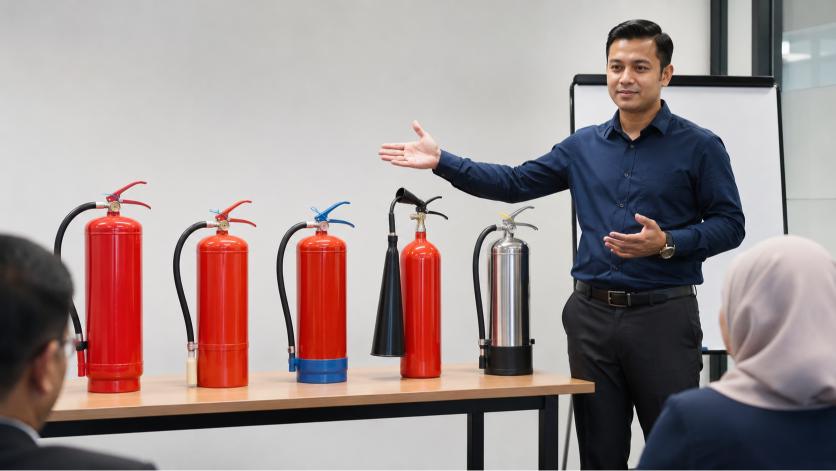
Choosing the right type of fire extinguisher depends on the fire risk in each area of the building.
Important factors include:
- Type of materials present
- Electrical risk
- Kitchen or cooking risk
- Flammable liquid risk
- Occupancy and building usage
- Accessibility
- Location of escape routes
- Maintenance requirements
- Fire safety compliance needs
In addition, extinguisher placement should be reviewed properly. An extinguisher should be visible, accessible and suitable for the surrounding risk.
Before buying or installing extinguishers, speak with FESDES to ensure your fire safety arrangement is suitable for your building.
Fire Extinguisher Placement in Buildings
Fire extinguisher placement is as important as extinguisher type. Even if the correct extinguisher is available, it may not be useful if people cannot access it during an emergency.
A proper review may consider distance, visibility, mounting height, signage, obstruction, escape route and risk area.
For example, extinguishers near kitchen areas, electrical rooms and high-risk zones may require different placement considerations.
Therefore, every building should review extinguisher placement based on actual layout and usage.
Fire Extinguisher and Fire Safety Compliance
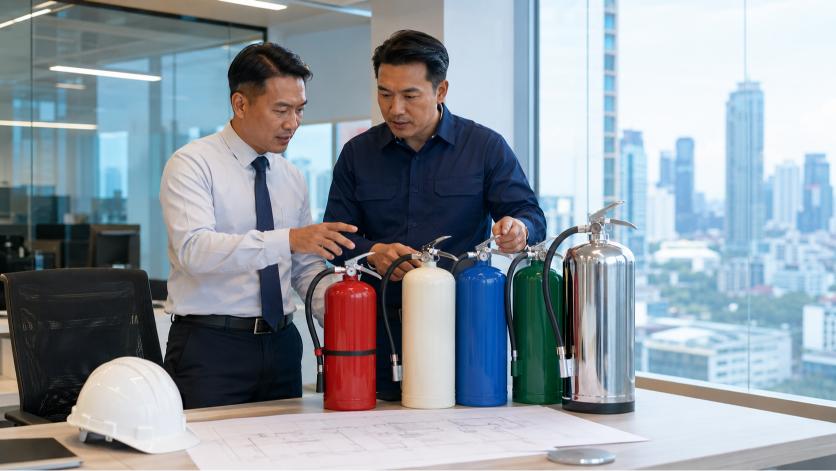
Fire extinguishers are part of building fire safety compliance. However, compliance is not only about having the equipment installed. The extinguisher type, placement, condition, maintenance and suitability should also be considered.
For official fire safety information in Malaysia, building owners may refer to Jabatan Bomba dan Penyelamat Malaysia here:
Outbound link:
However, every building condition may be different. Therefore, it is helpful to work with a fire safety consultant who can review the actual building and recommend practical next steps.
For broader compliance support, you may also read our fire safety compliance article.
How FESDES Can Help
FESDES helps building owners, facility managers, contractors and project teams review fire safety matters more clearly.
Our support may include:
- Fire extinguisher suitability review
- Fire protection system advisory
- Building fire safety assessment
- Fire safety compliance review
- Emergency route and signage review
- Fire risk identification
- Technical support for building projects
However, every project is different. That is why FESDES first understands your building type, usage, layout and fire safety concern before recommending the most suitable next step.
Get Fire Safety Advisory for Your Building
If you are unsure about the right type of fire extinguisher for your home, office, shop, factory or building, FESDES is ready to assist.
We can help review your fire safety requirements and recommend practical next steps based on your building condition.
Contact FESDES today to discuss your project and improve your building fire safety readiness.
FAQs About Type of Fire Extinguisher
What is the most common type of fire extinguisher?
The most common types include water, foam, dry powder, carbon dioxide, wet chemical and clean agent extinguishers. The right type depends on the fire risk and building area.
Which fire extinguisher is suitable for electrical fires?
Carbon dioxide and some dry powder extinguishers are commonly used for electrical fire risks. However, the selection should depend on the actual equipment and building condition.
Which fire extinguisher is suitable for kitchen fires?
Wet chemical fire extinguishers are commonly used for kitchen fires involving cooking oil or fat.
Can one fire extinguisher be used for all fires?
No, different fires require different extinguishing agents. Choosing the wrong extinguisher may create more risk.
Where should fire extinguishers be placed?
Fire extinguishers should be visible, accessible and placed near relevant risk areas without blocking escape routes.
Can FESDES help review fire extinguisher requirements?
Yes, FESDES can help review fire extinguisher suitability, placement and overall fire safety requirements for buildings.
To explore more specialized topics across our platform, you can browse through our comprehensive archives covering fire inspection Malaysia, fire protection consultancy, building fire safety review, fire safety planning, and fire safety compliance. For deeper technical insights, check out our resources on fire engineering, fire safety risk assessment, fire protection engineering, fire protection system Malaysia, and expert advice from a fire consultant Malaysia. Additionally, find practical guides regarding fire extinguisher Malaysia, fire certificate preparation, an essential fire extinguisher guide, and thorough fire safety audit Malaysia. Finally, enhance your knowledge with advanced strategies including the performance-based fire safety approach, performance-based fire engineering, vital Bomba preparation, and complete fire safety documentation Malaysia.